The works
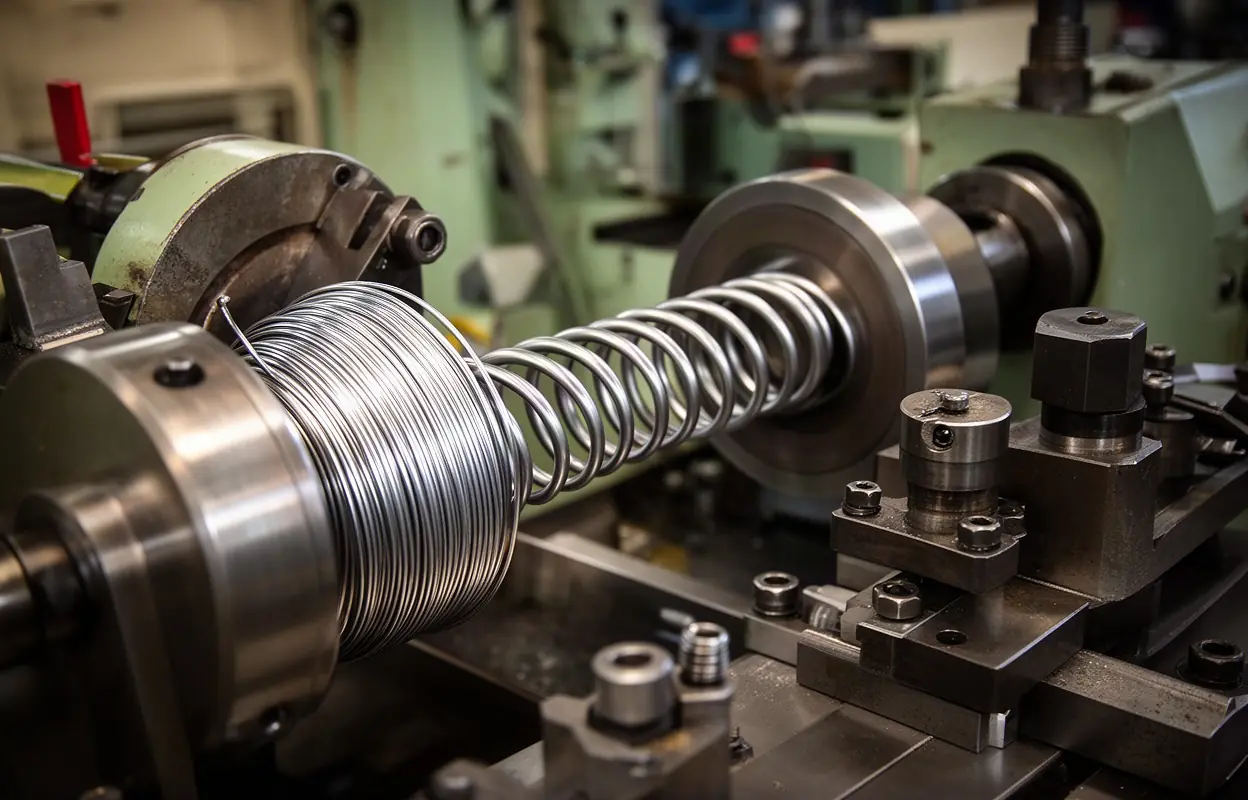
CNC coilers and benders, a heat-treat oven, and an inspection bench by the door. Small enough that the person who quotes your spring can walk over and look at it.
From numbers to a box of springs
You send four answers
Load, space, conditions, quantity. Or the numbers from the calculator.
An engineer checks them
We say if the stress is too high or the coils will touch, before we quote.
A sample batch
Wound, heat-treated and measured. About ten working days.
The run
Made to the sample you signed off, with first and last pieces measured. Usually three to five weeks.
- Part
- CS-2071 compression spring
- Lot
- 2611-07
- Wire
- 2.00 mm music wire, mill cert attached
- Checked
- 5 pieces, 10 Nov
| Dimension | Nominal | Tolerance | Measured, 5 pcs | |
|---|---|---|---|---|
| Free length | 72.0 mm | ±0.7 | 71.8 72.1 71.9 72.2 72.0 | Pass |
| Outside diameter | 20.0 mm | ±0.25 | 20.1 19.9 20.0 20.1 20.0 | Pass |
| Load at 60 mm | 48 N | ±10% | 47.2 48.9 46.8 49.5 48.1 | Pass |
| Squareness | ≤1.5° | 0.8 1.1 0.6 1.2 0.9 | Pass |
Signed off before the run starts. A copy goes in the box.
The sheet in the box
The first pieces off the coiler are measured against your drawing before the rest are made. You get the sheet with the springs, and the mill's certificate for the wire they came from.
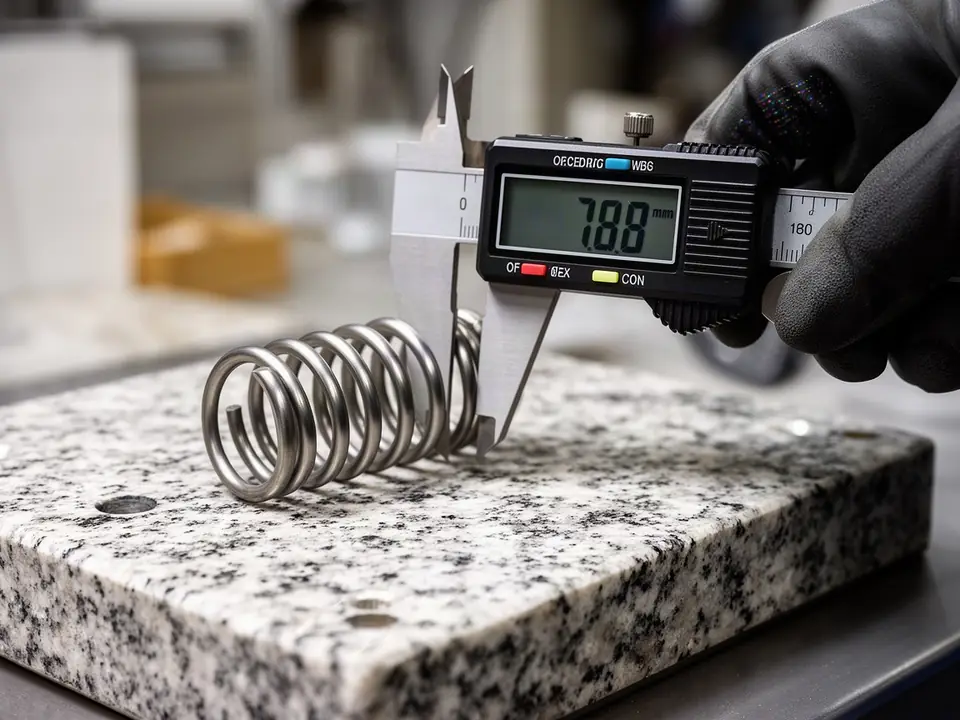
Measured, then packed
Free length, outside diameter and load at your working length, checked on the first pieces of every batch. The readings go in the box with the springs.
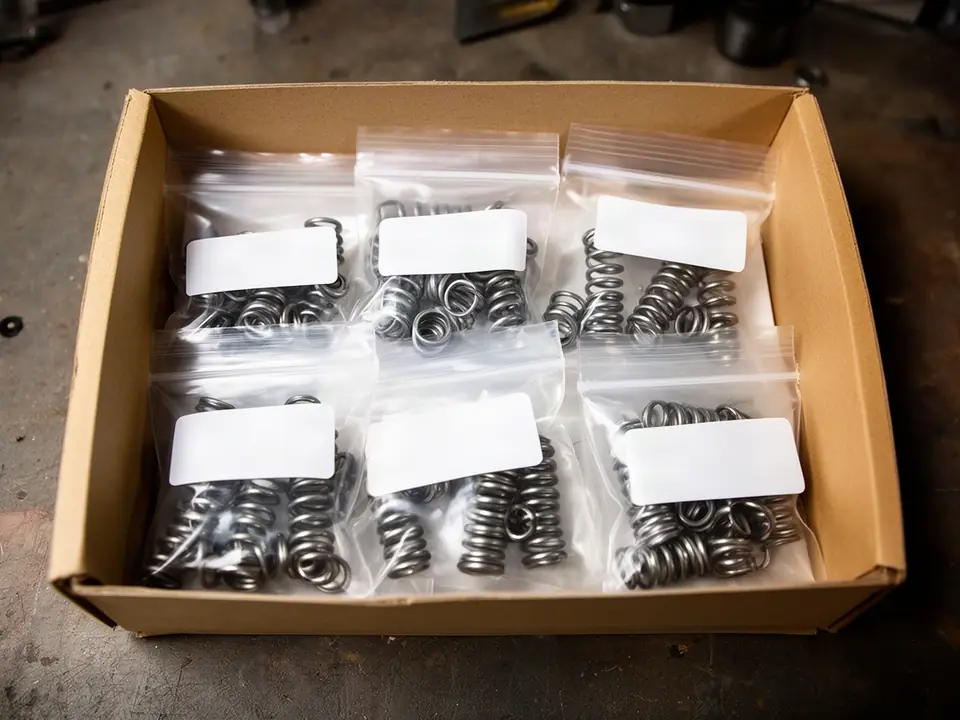
Samples in small bags
Each sample set is bagged by version, so when you test three wire sizes you can tell them apart on the bench.
Ask for samples